
On September 19, 2025, the White House issued a Presidential Proclamation imposing a $100,000 filing fee for certain H-1B workers.
The advent of this Proclamation has created a lot of uncertainty. The Department of Homeland Security (“DHS”) issued some initial clarifying guidance on September 20, 2025, but we are hopeful that more guidance will ensue.
Several groups have already announced that they intend to challenge the legality of the Proclamation, since USCIS filing fees must bear a reasonable relationship to the cost for the agency to provide that service and the agency must also first publish them in the Federal Register.
1. Key Takeaways, In The Interim
1. We are still waiting for more agency guidance as to whether the Presidential Proclamation of Sept 19, 2025 only applies to new H-1B lottery petitions starting in April 2026 and that designate consular processing for brand new workers that are still overseas.
2. The U.S. Citizenship and Immigration Services (“USCIS”) and U.S Customs and Border Protection (“CBP”) issued memos on September 20 indicating that the $100,000 fee only applied to new petitions filed on or after September 21, 2025. However, the memos were silent on all other issues.
3. The White House press secretary issued a clarification on X on September 20 indicating that the fee will first apply to H-1B lottery cases starting in April. See the X posting below.
4. Petitions filed before September 21, 2025 should not be impacted, nor should H-1B travel or visa stamping be impacted at this time for petitions that were filed prior to that date.
5. The USCIS website makes no mention of any $100,000 filing fee for any H-1B petition filing. Indeed, at this time there appears to be no way to even pay the fee if it were required.
6. H-1B workers with petitions filed before September 21, 2025 should be able to travel abroad and return with a valid H-1B visa stamp and passport based on the White House posting on X and the agency memos from September 20. And to date we have not heard of any H-1B workers having difficulty returning to the U.S.
7. Non-lottery petitions filed on or after September 21, 2025 might incur a $100,000 filing fee but the guidance on this question is unclear. Therefore H-1B workers who are the beneficiary of a new petition filed on or after September 21, 2025 should not travel abroad at this time until more guidance is given by the federal agencies.
8. It also remains unclear how the Courts will look at this Proclamation and subsequent agency actions – whether it is within the Executive Branch’s authority or only that of Congress.
9. Assuming the Courts uphold most or all of the Proclamation, it also remains unclear whether the Secretary of Homeland Security will use the discretion granted to her in the Proclamation to exempt certain industries, companies, or individuals from the $100,000 filing fee on the basis of national interest.
10. While there is no guarantee, this is what we know about the new fee at this time. It could change. We will keep readers apprised as developments occur.
2. White House Clarification Posted On X On September 20
To be clear:
1.) This is NOT an annual fee. It’s a one-time fee that applies only to the petition.
2.) Those who already hold H-1B visas and are currently outside of the country right now will NOT be charged $100,000 to re-enter.
H-1B visa holders can leave and re-enter the…
— Karoline Leavitt (@PressSec) September 20, 2025
3. Additional Guidance And Commentary
• While not a certainty, it appears the primary intent of the Proclamation is to target IT workers who are overseas and hope to be selected in the March 2026 H-1B lottery. If they are overseas and their visa number is selected in the lottery, then the employer will have to file an I-129 petition, indicate consular processing, and pay the $100,000 filing fee prior to filing the petition.
• When Congress created the H-1B program in 1990, it did not tie it to proving that there was a shortage of U.S. workers. At the time there was a known shortage of IT workers, so Congress only mandated that the position require a 4-year degree related to the duties of the position and that wages would not adversely affect U.S. workers. Congress also set an annual quota on the number of new H-1B visa holders.
• The Proclamation also directs the Department of Labor (“DOL”) to review and prioritize H-1B petitions and visas for the most highly skilled and highly paid workers. The lottery will give four selection opportunities for a position where the employer is willing to pay a Level 4 wage, three selection opportunities for a Level 3 wage offer, etc. The Proclamation cites the H-1B Labor Condition Application (“LCA”) requirement as outlined in 8 U.S.C. 1182(n). The congressional statute cited in the Proclamation requires that H-1B wages be on par with what U.S. workers are being paid for the same position and job requirements and that the H-1B wage not adversely impact U.S. worker wages.
• Limiting the H-1B lottery program to only the highest paid and highest skilled workers may thwart the intent of Congress which limited the H-1B program to professional occupations involving at least a relevant 4-year degree. Therefore, this area seems ripe for litigation as Congress wrote in the statute that the program must protect American wages, but it did not require that only the highest skilled and highest paid workers (“Level 4”) be accepted. On the other hand, if the White House feels that U.S. wages are being adversely affected by the current H-1B lottery selection method, the Courts could uphold the new H-1B lottery selection method.
• It is also likely that the DOL will attempt to increase the prevailing wage for all H-1B petitions (including not lottery petitions) and start commencing more H-1B wage and hour audits to determine if employers are paying at least what the agency believes is the correct prevailing wage level for the position.
• It remains to be seen how this will play out. Since the DOL sets the 4 level prevailing wage already, the presumption is they are already accurate and protecting U.S. workers. https://flag.dol.gov/wage-data/wage-search
4. Conclusion
The intent of the Proclamation is primarily to stem the future flow of IT workers from overseas, which the Administration feels causes U.S. wages to drop and is leading to rising unemployment in this sector. Also, generally employers should expect to pay higher wages to H-1B workers in the future.
To read more articles like this one, subscribe to the ALERT Newsletter today!
About The Authors

Greg L. Berk is a Partner in the law firm of Sheppard, Mullin, Richter & Hampton LLP in the firm’s Orange County office. He leads the Firm’s immigration practice and is a Certified Specialist in Immigration and Nationality Law by the State Bar of California Board of Legal Specialization>. He has over 25 years of experience advising on all aspects of U.S. immigration matters. He assists employers worldwide with the hiring and retention of foreign national executives and highly talented individuals that are needed in their U.S. workforce. He also works with investors on E-2, L-1, and EB-5 matters. He also handles I-9 and other immigration compliance matters.
Greg frequently lectures on immigration issues and is a regular contributor to the California Labor and Employment ALERT Newsletter and Sheppard Mullin’s Labor & Employment Law blog. Mr. Berk received his J.D. from Western State University College of Law, his M.B.A. from George Washington University and his B.A. from California State University.
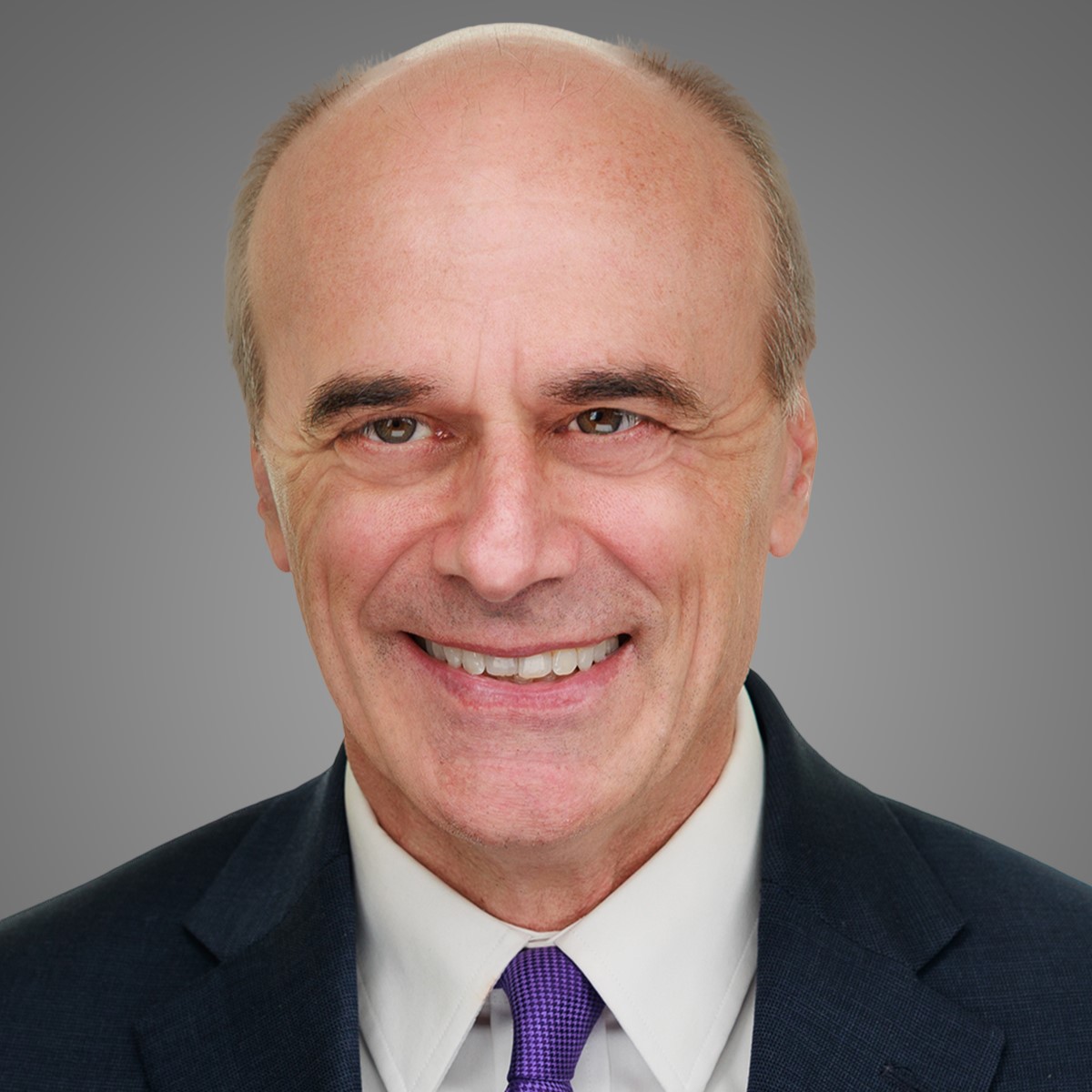
Jonathan Meyer is a Partner in the Governmental Practice Group with the law firm of Sheppard, Mullin, Richter & Hampton LLP in the firm’s Washington DC offices. He counsels clients on their interactions with federal and state government, as well as national and homeland security, Congressional oversight, cybersecurity, AI, high tech, and transportation security, among other issues.
Prior to returning to Sheppard Mullin, Jon was nominated by President Biden and confirmed by the Senate as the Sixth General Counsel of the U.S. Department of Homeland Security, serving from 2021 to 2024.
Jon is regularly sought out by the media – including CBS News, NPR, The Wall Street Journal, The New York Times, The Washington Post and Politico – on issues including national security, homeland security, government investigations, cybersecurity, immigration, politics and Congress.