Description
Recent legislative, regulatory, and judicial developments have significantly reshaped the laws governing employee handbooks and personnel policies. It is essential that employer’s update policies to respond to new requirements involving changes to the law. This includes critical developments regarding leaves of absence, time off rights, paid sick leave, workplace safety & violence prevention, discrimination and harassment. They must also address new rules governing electronic communications, drug and alcohol policies, and numerous other workplace practices.
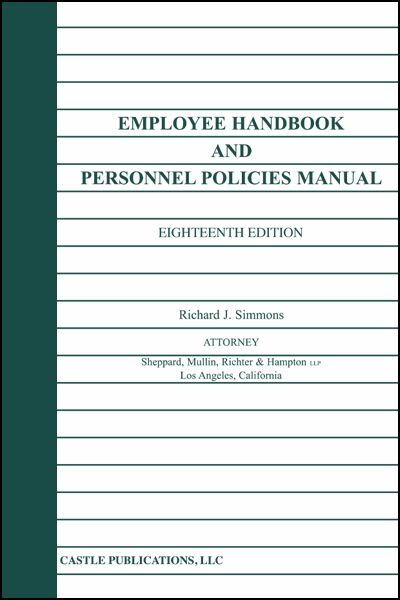
The New 2026 edition of the Employee Handbook and Personnel Policies Manual, authored by Attorney Richard J. Simmons of Sheppard, Mullin, Richter & Hampton LLP, is one of the nation’s most comprehensive resources for developing and maintaining legally compliant employee handbooks. Written for employers throughout the United States—with an unparalleled emphasis on California and federal employment law—the Manual provides practical guidance for drafting effective policies while avoiding common legal pitfalls.
More than a collection of sample policies, the 18th edition of the Employee Handbook Manual explains why policies matter, how recent legislation and court decisions have changed employer obligations, and how carefully drafted handbook provisions can help employers promote consistency, reduce legal risk, and strengthen defenses to discrimination, harassment, retaliation, wage and hour, and wrongful termination claims.
Whether updating an existing handbook or developing a new one, employers will find this indispensable desk reference to be an essential resource for drafting legally compliant personnel policies and administering consistent workplace practices.
New and Updated for 2026
The 2026 edition has been extensively revised to address significant federal and California employment law developments, including:
- Updated Equal Employment Opportunity (EEO) policies reflecting recent FEHA and federal developments
- Pregnant Workers Fairness Act
- New California pregnancy leave, accommodation, transfer, and notice requirements
- California’s expanded time off rights for jury duty, witness duty, victims of crime, domestic violence, stalking, and qualifying acts of violence
- Updated paid sick leave and leave of absence policies reflecting recent legislative changes
- New Paid Family Leave (PFL) and Family Temporary Disability Insurance (FTDI) developments
- Cell phone & business expense reimbursement policies
- The newest policies and thoughts on integrated at-will statements
- Reproductive Loss Leave policies
- Updated telework policies and considerations
- Updated dress, grooming, and protected hairstyle policies
- New policies regarding cannabis use and restrictions
- Off-duty conduct policies
- Arbitration developments
- New affirmative action guidance and EEOC positions
- Updated drug and alcohol policies
- Meal and rest period policies and guidance regarding waivers and new case law developments
- Overtime authorization policies designed to promote compliance while controlling labor costs
- Recent California legislation affecting employee handbooks
- Important judicial developments, including the Iloff, Hirdman, and Mills v. Target decisions
Comprehensive Coverage Includes
- Employment At-Will
- Equal Employment Opportunity
- Anti-Discrimination, Retaliation, and Anti-Harassment
- Grievance Procedures and Dispute Resolution
- Standards of Conduct
- Progressive Discipline
- Vacation and PTO
- Paid Sick Leave
- California and Federal Leave of Absence Laws
- CFRA, FMLA, Pregnancy Disability Leave, and Paid Family Leave
- Bereavement Leave
- Military Leave
- Workplace Safety & Violence Prevention
- Drug Testing
- Electronic Devices and Computer Usage
- Social Media and Networking Policies
- Privacy and Personnel Records
- Wage and Hour Policies
- Meal and Rest Breaks
- Overtime Policies
- Lactation Accommodation
- Interactive Process and Disability Accommodation
- Dress, Grooming, and Protected Hairstyles
- Safety Programs
- Layoffs, Furloughs, and Reductions in Force
- No-Rehire Policies
- Acknowledgement Forms
- Hundreds of Sample Policies That Offer Employers Options
- Compliance Checklists
- And much more…
Enroll in our upcoming Employee Handbook and Personnel Policies program which includes a copy of the new 2026 Employee Handbook and Personnel Policies Manual!
Table Of Contents
PREFACE
CHAPTER 1 INTRODUCTION
1.1 GENERAL SCOPE
1.2 ADVANTAGES AND DISADVANTAGES OF HANDBOOKS
1.3 FORMAT AND STYLE OF HANDBOOKS
1.4 ESSENTIAL PERSONNEL POLICIES
1.5 USE OF DISCLAIMERS
1.6 REVIEW BY LEGAL COUNSEL
1.7 ABBREVIATIONS AND LEGAL CITATIONS
CHAPTER 2 STATE AND FEDERAL REQUIREMENTS
2.1 OVERVIEW
2.2 APPLICABLE LABOR RELATIONS LAWS
2.3 RELATIONSHIP OF OTHER LAWS
CHAPTER 3 HANDBOOK AND POLICIES CHECKLISTS
3.1 SCOPE OF CHAPTER
3.2 SUBJECT CHECKLIST
3.3 LEGAL CHECKLIST
3.4 CHECKLIST ON FORMAT AND STYLE
CHAPTER 4 EMPLOYEE CLASSIFICATIONS
4.1 GENERALLY
4.2 COMMON CLASSIFICATIONS
4.3 ADDITIONAL CLASSIFICATIONS
4.4 PROBATIONARY AND INTRODUCTORY EMPLOYEES
4.5 PERMANENT EMPLOYEES
4.6 REGULAR EMPLOYEES
4.7 FULL-TIME EMPLOYEES
4.8 PART-TIME EMPLOYEES
4.9 TEMPORARY EMPLOYEES
4.10 PER-DIEM (“NON-BENEFIT”) EMPLOYEES
4.11 SEASONAL EMPLOYEES
4.12 ON-CALL (“STANDBY”) EMPLOYEES
4.13 EXEMPT AND NONEXEMPT EMPLOYEES
4.14 ANNIVERSARY DATES
4.15 BENEFIT CONSIDERATIONS
CHAPTER 5 COMPENSATION AND PAYROLL PRACTICES
5.1 GENERALLY
5.2 EXEMPT AND NONEXEMPT CLASSIFICATIONS
5.3 OVERTIME POLICIES
5.4 TIMEKEEPING PRACTICES
5.5 OFFICE AND WORK SCHEDULES
5.6 MEAL AND REST PERIODS
5.7 ATTENDANCE AT LECTURES, MEETINGS, AND TRAINING PROGRAMS
5.8 REPORTING-TIME PAY (SHOW-UP PAY)
5.9 MEAL, LODGING, AND TIP CREDITS
5.10 UNIFORMS, TOOLS, EQUIPMENT, AND EXPENSES
5.11 COMPENSATORY TIME OFF PRACTICES
5.12 SHIFT AND WEEKEND DIFFERENTIALS
5.13 EMPLOYEES PAID COMMISSIONS
5.14 PIECEWORKERS
5.15 WAGE AND SALARY REVIEWS
5.16 PAYROLL DEDUCTIONS
5.17 ADVANCES
5.18 DEPOSITS
5.19 GRATUITIES
5.20 WAGE GARNISHMENTS
5.21 PAYROLL PERIODS
5.22 PAYDAYS
5.23 SALARY BASIS POLICY
5.24 SEVERANCE PAY AND PAY IN LIEU OF NOTICE
5.25 PAY SCALES AND EQUAL PAY POLICIES
CHAPTER 6 EMPLOYEE BENEFITS
6.1 INTRODUCTION
6.2 ERISA AND OTHER BENEFIT LAWS
6.3 DRAFTING CONSIDERATIONS
6.4 SPECIFIC TYPES OF DISCRETIONARY BENEFITS
6.5 LEGISLATED BENEFITS
6.6 COBRA – HEALTH INSURANCE CONTINUATION RULES
CHAPTER 7 LEAVES OF ABSENCE
7.1 INTRODUCTION
7.2 PERSONAL LEAVES OF ABSENCE
7.3 MEDICAL LEAVES OF ABSENCE
7.4 NON-MEDICAL LEAVE AND TIME OFF PROTECTIONS
7.5 CALIFORNIA’S ADDITIONAL TIME OFF PROTECTIONS
7.6 FAMILY AND MEDICAL LEAVES
7.7 CALIFORNIA’S PAID FAMILY LEAVE LAW
7.8 ALCOHOL AND DRUG REHABILITATION LEAVES
7.9 SPOUSAL MILITARY LEAVES
7.10 ADDITIONAL LEAVES OF ABSENCE CONSIDERATIONS
CHAPTER 8 PERFORMANCE, DISCIPLINE, AND GRIEVANCES
8.1 GENERALLY
8.2 STANDARDS OF PERFORMANCE AND CONDUCT
8.3 SAMPLES OF COMPANY RULES
8.4 PROGRESSIVE DISCIPLINE
8.5 DOCUMENTATION OF DISCIPLINARY ACTION
8.6 PERFORMANCE EVALUATION SYSTEMS
8.7 SECOND-TIER REVIEWS
8.8 GRIEVANCE AND OTHER DISPUTE RESOLUTION PROCEDURES
8.9 EXIT INTERVIEWS
8.10 INSPECTION OF PERSONNEL FILES
8.11 JOB REFERENCES
8.12 NOTICE OF RESIGNATION POLICIES
CHAPTER 9 LAYOFF AND STAFF REDUCTION POLICIES
9.1 INTRODUCTION
9.2 FORMAL VS. INFORMAL POLICIES
9.3 DEFINITION OF LAYOFF
9.4 CIRCUMSTANCES THAT GIVE RISE TO LAYOFFS
9.5 JOB PRESERVATION FACTORS
9.6 BENEFIT ISSUES
9.7 WORKER ADJUSTMENT AND RETRAINING NOTIFICATION ACT
9.8 ADDITIONAL CONSIDERATIONS
CHAPTER 10 SAFETY, EFFICIENCY, AND SUBSTANCE ABUSE
10.1 INTRODUCTION
10.2 THE PROHIBITION OF SUBSTANCE ABUSE
10.3 DRUG-FREE WORKPLACE ACT OF 1988
10.4 DEFENSE CONTRACTORS
10.5 DEPARTMENT OF TRANSPORTATION REGULATIONS
10.6 OTHER FEDERAL REGULATIONS
10.7 CALIFORNIA DRUG-FREE WORKPLACE ACT OF 1990
10.8 DRAFTING CONSIDERATIONS REGARDING DRUG AND ALCOHOL POLICIES
10.9 IMPLICATIONS OF DISABILITY DISCRIMINATION LAWS
10.10 SMOKING IN THE WORKPLACE
CHAPTER 11 SAMPLE PERSONNEL POLICIES
11.1 OVERVIEW
11.2 INTRODUCTORY AND GENERAL INFORMATION POLICIES
11.3 EMPLOYEE ACKNOWLEDGEMENT FORMS
11.4 EMPLOYEE CLASSIFICATIONS
11.5 ORIENTATION, TRANSFER, AND PROMOTION POLICIES
11.6 PAYROLL, SCHEDULING, AND OVERTIME PRACTICES
11.7 BENEFITS
11.8 LEAVE OF ABSENCE POLICIES
11.9 PERFORMANCE, DISCIPLINE, AND GRIEVANCE POLICIES
11.10 LAYOFF POLICIES
11.11 SAFETY, HEALTH, AND SUBSTANCE ABUSE POLICIES
CASE TABLE
SUBJECT INDEX
About The Author

Richard J. Simmons is a Partner in the law firm of Sheppard, Mullin, Richter & Hampton LLP in Los Angeles. He represents employers in various employment law matters involving litigation throughout the country and general advice regarding state and federal wage and hour laws, employment discrimination, wrongful discharge, employee discipline and termination, employee benefits, affirmative action, union representation proceedings, and arbitrations. Mr. Simmons received his B.A., summa cum laude, from the University of Massachusetts, where he was a Commonwealth Scholar and graduated in the Phi Kappa Phi Honor Society. He received his J.D. from Berkeley Law at the University of California at Berkeley where he was the Editor-in-Chief of the Industrial Relations Law Journal, now the Berkeley Journal of Employment and Labor Law.
Mr. Simmons argued the only case before the California Supreme Court that produced a victory for employers and business in 2018. He was recently recognized as the Labor and Employment Attorney of the Year by the Los Angeles Business Journal and was inducted into the Employment Lawyers Hall of Fame. He has lectured nationally on wage and hour, employment discrimination, wrongful termination, and other employment and labor relations matters. He is a member of the National Advisory Board to the Berkeley Journal of Employment and Labor Law, published by Berkeley Law at the University of California at Berkeley. He was also appointed by the California Industrial Welfare Commission as a member of three Minimum Wage Boards for the State of California.